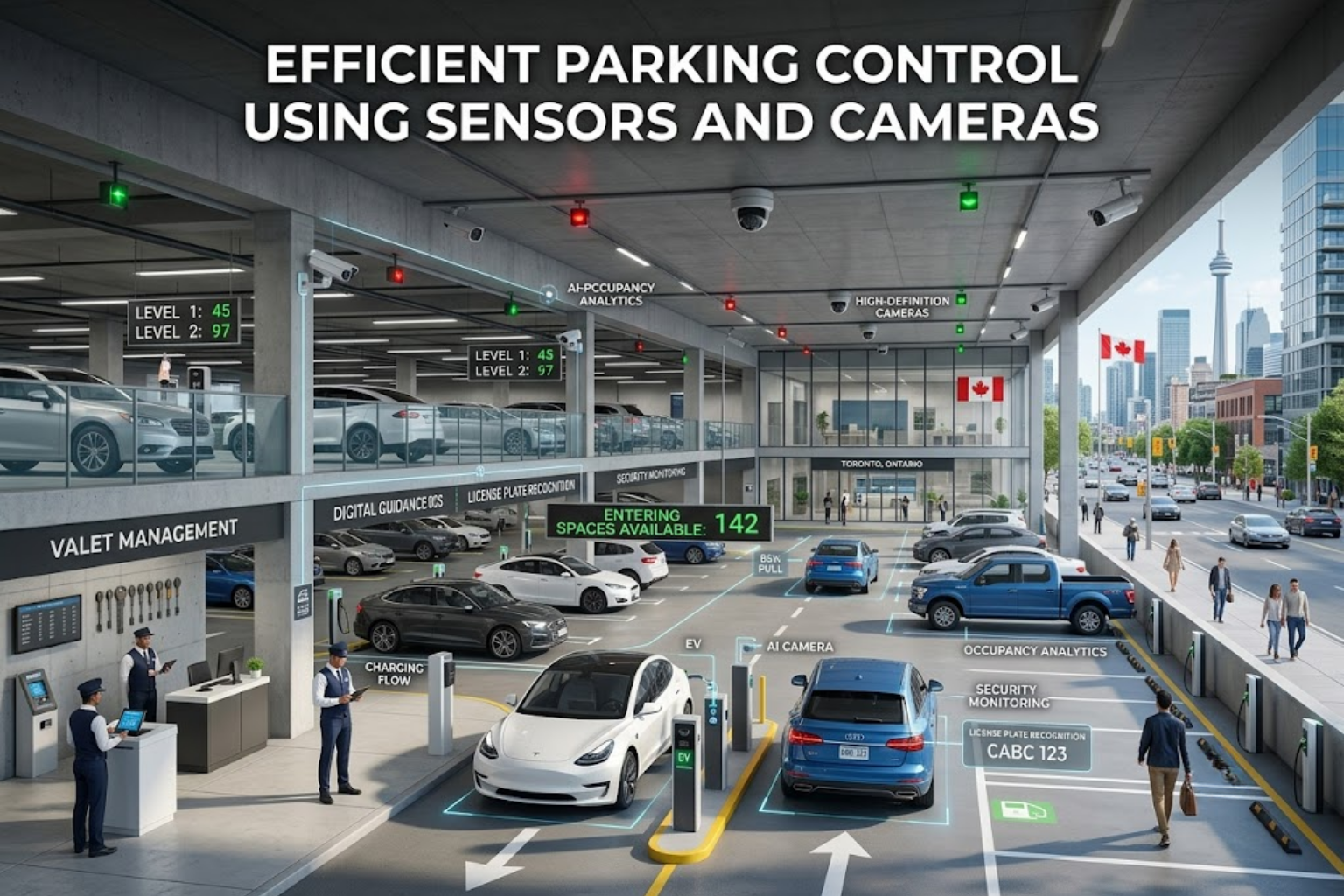




Urban areas continue to experience growing traffic and increasing demand for parking spaces. Traditional parking systems often result in long search times, traffic congestion, and inefficient space utilization, frustrating both drivers and parking operators. As cities become smarter, parking management must also evolve through intelligent technologies that improve efficiency, security, and user convenience. Modern smart parking solutions combine advanced sensors, AI-powered cameras, IoT connectivity, and real-time analytics to create a seamless parking experience. By automating vehicle detection, monitoring occupancy, and optimizing parking operations, these systems help reduce congestion while improving overall parking management.
The Need for Smarter Parking Management
Conventional parking facilities rely heavily on manual monitoring and outdated systems that provide limited visibility into parking availability. Smart parking platforms overcome these challenges by delivering real-time occupancy monitoring, automated vehicle detection, digital parking guidance, faster vehicle entry and exit, and improved space utilization. This intelligent approach creates a more organized, efficient, and user-friendly parking environment for both operators and drivers.
Sensor and Camera-Based Vehicle Detection
Modern parking systems use intelligent sensors and high-definition cameras to monitor every parking space with exceptional accuracy. These technologies instantly detect vehicle occupancy, identify available spaces, monitor parking duration, improve traffic flow inside facilities, and significantly reduce the need for manual supervision. Accurate real-time detection allows drivers to locate parking quickly while minimizing unnecessary vehicle movement and congestion.
AI-Powered Parking Intelligence
Artificial Intelligence enhances parking management by analyzing data collected from cameras and IoT-enabled devices. AI-powered systems perform occupancy analytics, license plate recognition (LPR), predictive parking availability, traffic pattern analysis, and automated incident detection. These intelligent insights enable parking operators to optimize facility performance, improve operational efficiency, and deliver a better experience for visitors.
Real-Time Parking Guidance
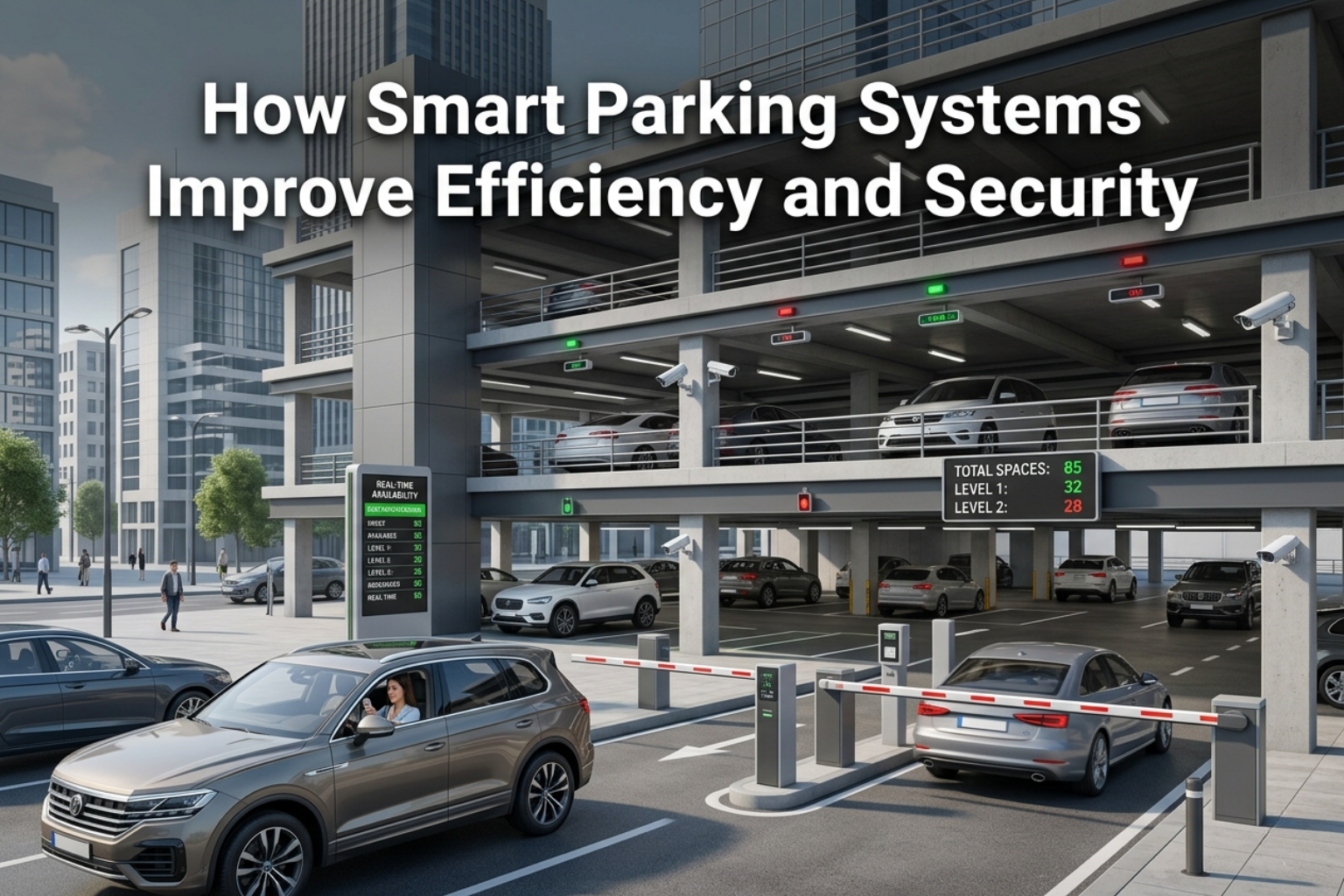
Finding a parking space is often the most time-consuming part of any journey. Digital parking guidance systems provide live information about available parking spaces, floor-wise occupancy, directional navigation, entry and exit routes, and real-time parking availability. This reduces search time, minimizes traffic congestion inside parking facilities, and creates a smoother experience for every driver.
Enhancing Security and Access Control
Security remains one of the most important aspects of modern parking management. Integrated AI-powered cameras and monitoring systems provide continuous surveillance, automatic license plate recognition, unauthorized vehicle detection, entry and exit verification, and real-time incident monitoring. These capabilities strengthen security while giving operators complete visibility across the entire parking facility.
Smarter Valet Management
Digital valet management simplifies vehicle handling for hotels, shopping malls, airports, hospitals, and commercial buildings. Smart valet solutions digitally assign parking spaces, track vehicle locations, accelerate vehicle retrieval, reduce waiting times, and improve customer satisfaction. Automation allows valet services to become faster, more organized, and significantly more efficient.
IoT Connectivity for Centralized Monitoring
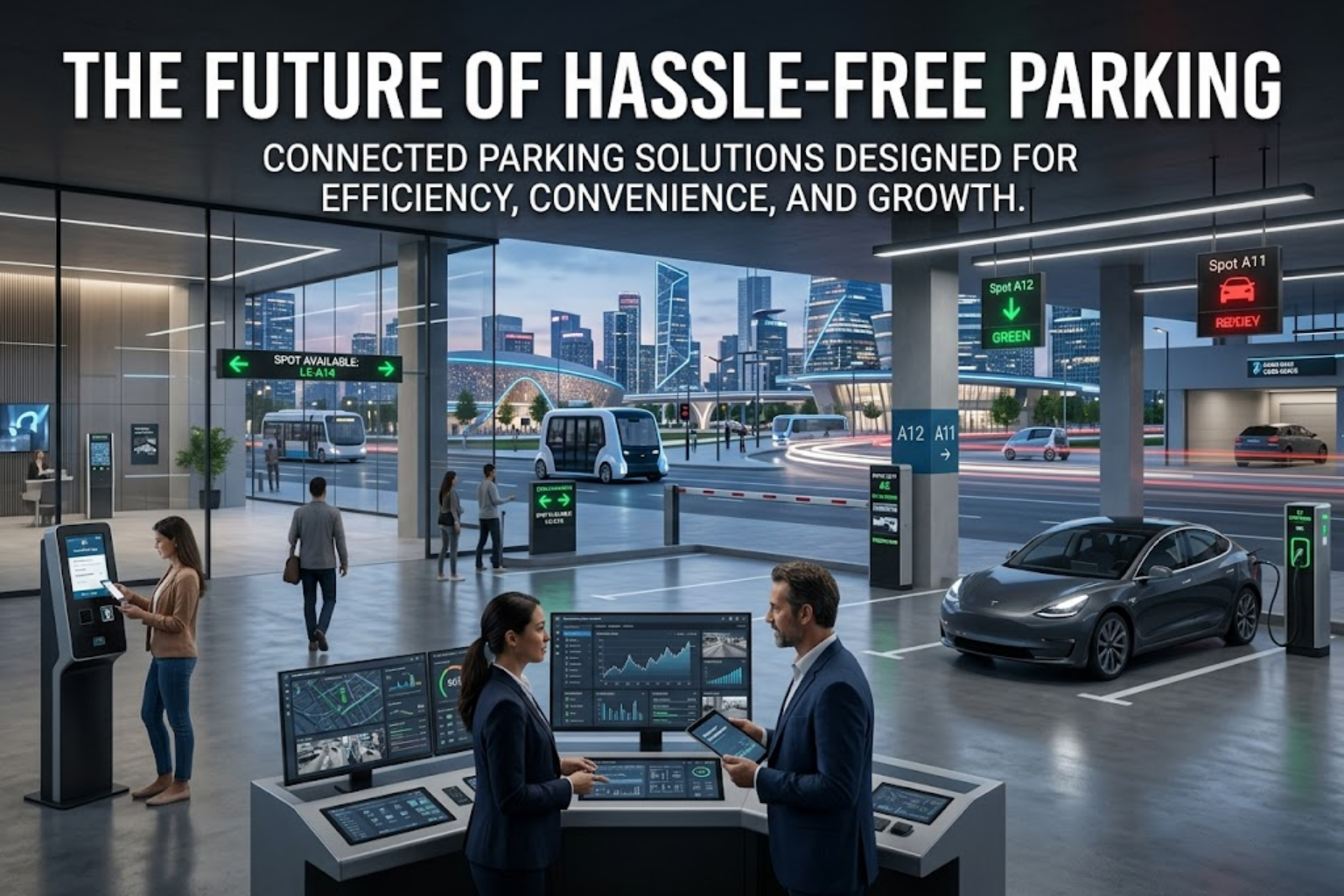
IoT-enabled parking infrastructure connects sensors, cameras, displays, and control systems into one centralized platform. Parking operators can monitor multiple locations, access live dashboards, receive instant alerts, analyze parking utilization, and remotely manage daily operations. Centralized monitoring improves decision-making, reduces operational costs, and enables more efficient facility management.
Value-Added Services for Better User Experience
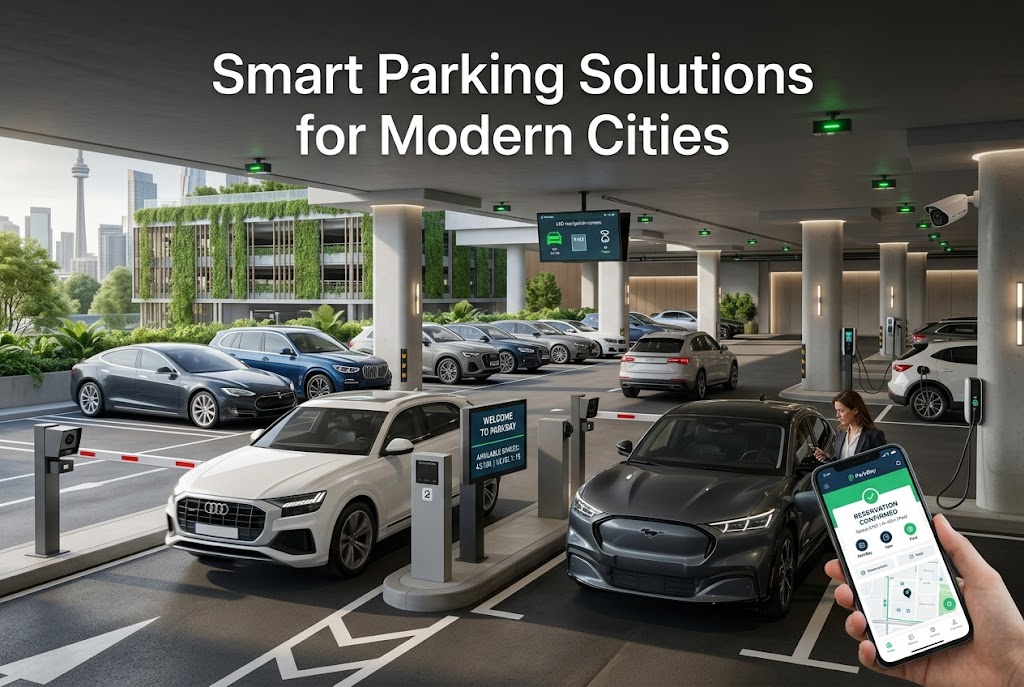
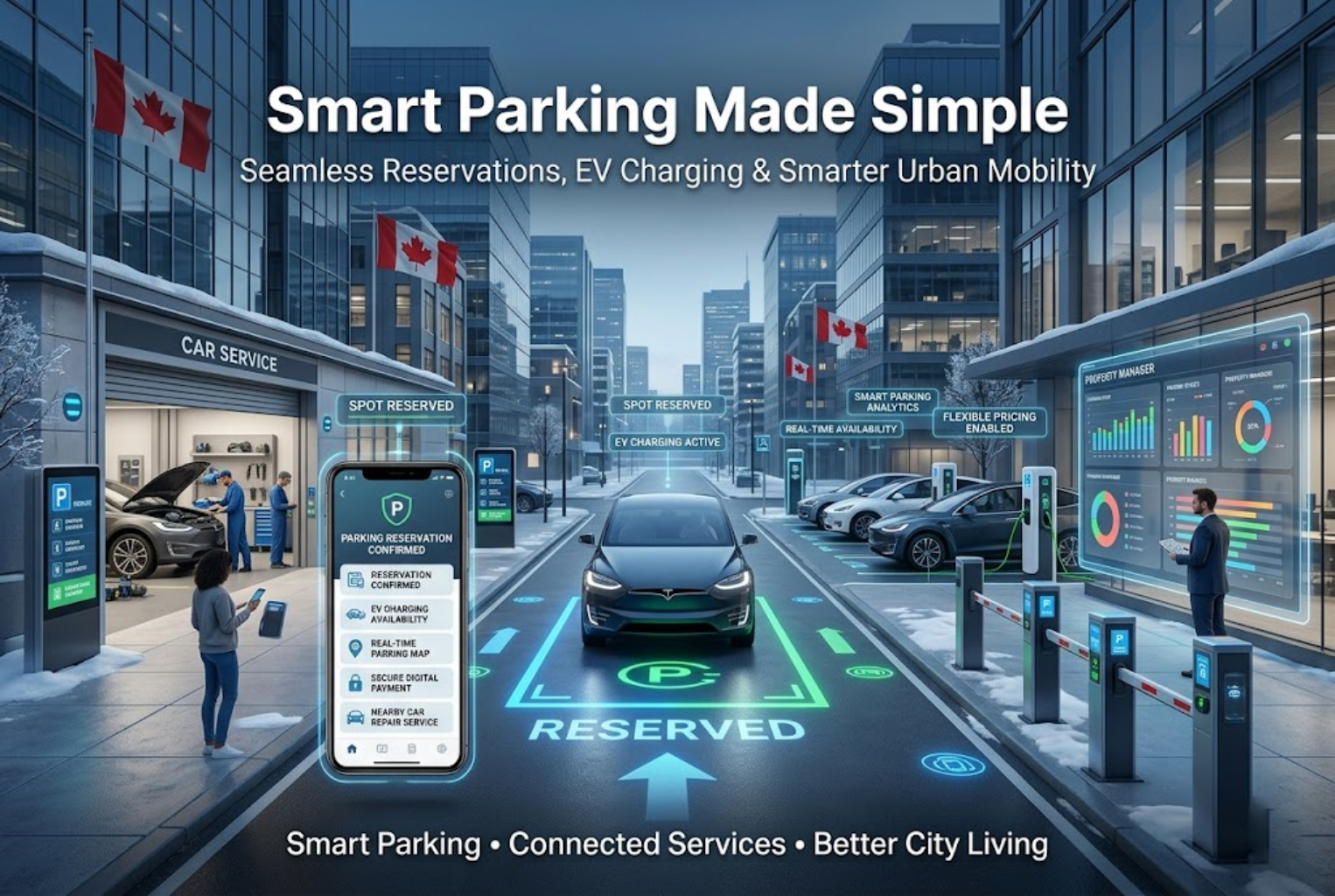
Modern smart parking platforms extend beyond traditional parking management by offering additional convenience features such as EV charging integration, online parking reservations, digital payment systems, mobile parking applications, and parking usage analytics. These value-added services enhance customer convenience while creating a more connected and seamless parking experience.
Benefits for Smart Cities
Efficient parking systems play a significant role in building smarter and more sustainable cities. By reducing traffic congestion, lowering vehicle emissions, optimizing parking infrastructure, improving public convenience, and supporting connected urban mobility, intelligent parking solutions contribute to cleaner cities and better transportation experiences for everyone.
The Future of Intelligent Parking
As Artificial Intelligence, Machine Learning, and IoT technologies continue to evolve, parking management will become increasingly automated and predictive. Future smart parking systems will feature AI-powered parking predictions, autonomous parking management, vehicle-to-infrastructure communication, fully automated access control, and seamless smart city integration. These innovations will redefine how cities manage parking and urban mobility in the years ahead.
Conclusion
Efficient parking control using sensors, cameras, AI, and IoT is transforming the future of urban mobility. By combining real-time monitoring, intelligent analytics, automated access, and centralized management, modern smart parking platforms improve efficiency, strengthen security, and deliver a better parking experience for both operators and drivers. As cities continue to grow, intelligent parking solutions will become an essential part of building smarter, safer, and more connected urban environments.
Leave a reply